
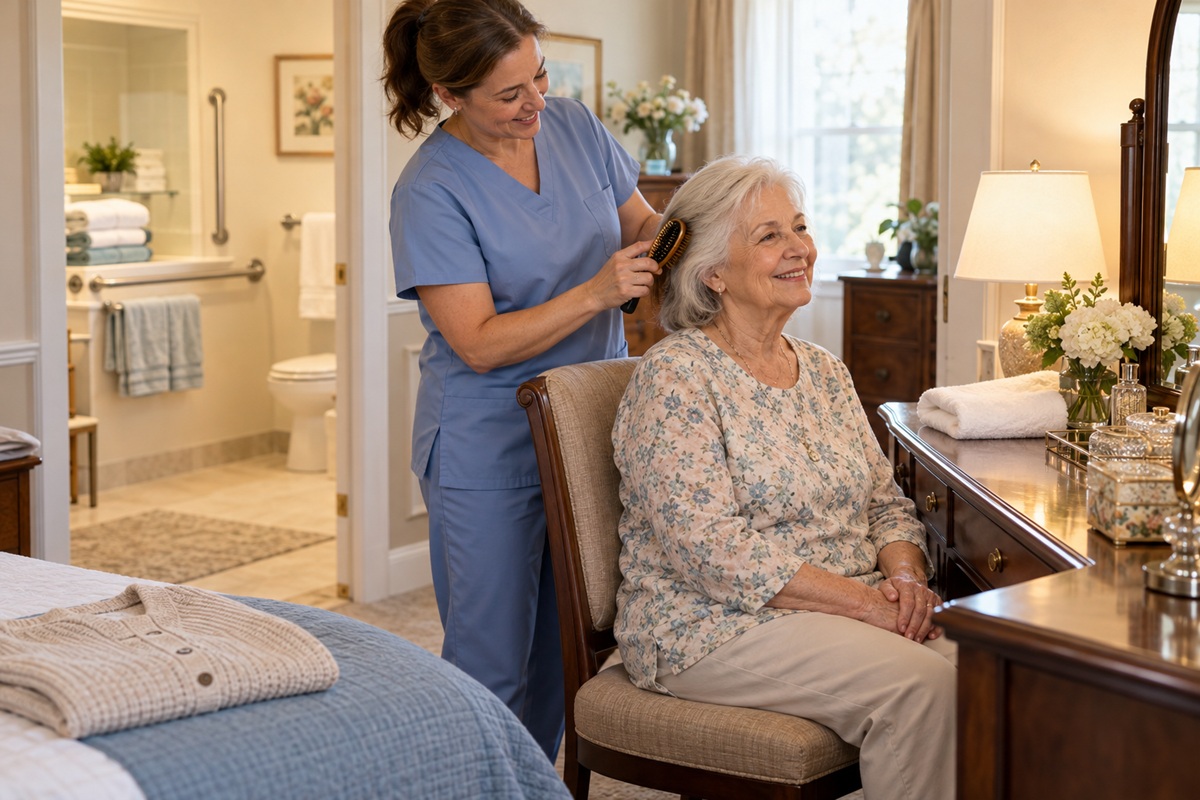
Seeing an aging parent become disoriented can be concerning. While it’s easy to converse with them about their declining health, talking about their neglected personal hygiene may feel like a difficult topic to bring up, especially when they say ‘I’m fine’ while their hair, clothes, or skin say otherwise.
Obviously, you don’t want to sound harsh but are still worried about their well-being. Seeing someone who used the bathroom by themselves, got dressed, and was ready before anyone else, and who kept up with grooming, now struggling with these standard daily living tasks can feel overwhelming.
This is when families consider assisted living personal care services. Assisted living is a professional care option that assists seniors with activities of daily living (ADLs). The care supports daily living needs that become harder with age. Staff provide dressing assistance, help with grooming, and support with bathing while preserving dignity and privacy.
Assisted living provides person-centered care, so the assistance feels natural and less noticeable. Tiered, personalized care balances safety with maximum independence.
But are there signs a family can look for to decide that it’s time for their loved one to seek assisted living support? And how does assisted living maintain dignity in personal care while providing professional support? We’re going to answer all these common questions in today’s blog.
Signs A Parent Needs Help With Personal Care
Moving to assisted living is a big step. For many seniors and their families, the move is a milestone in their life’s journey. Many families ignore early signs of health decline, but you shouldn’t. Neglecting grooming, bathing, and dressing can leave a loved one vulnerable to serious health complications.
Here are some of the most important signs a family should watch for to determine whether an aging loved one needs help with personal care.
Changes In Grooming
- The senior might begin to overlook hair and skin care, as shown by long, unkempt, unstyled hair.
- Their beard may grow fuller and thicker because they aren’t shaving.
- They skip oral hygiene habits such as brushing teeth, flossing, denture care, and monitoring gum health.
Body Odor
- Persistent body odor due to skipped baths, whether because of mobility difficulties, fear of falling, or cognitive changes.
Repeated Clothes
- Repeating the same clothes because of difficulty dressing.
- Needing reminders to change clothes or wear seasonally appropriate clothing.
Difficulty With Buttons
- Difficulty dressing because buttoning and zipping clothes is hard.
- Buttoning incorrectly or leaving some buttons undone.
Getting In And Out Of The Tub
- Difficulty getting in and out of the tub due to balance issues, joint pain, weakness, or reduced mobility.
- Unable to stand after a bath.
- Experienced a fall due to declining health.
How Assisted Living Supports Bathing, Dressing, And Grooming
Daily living activities may seem simple until a senior struggles to complete them because of aging. Activities of daily living (ADLs) are core tasks that support daily independence. Struggling with even one activity can point to an underlying issue related to aging or a health condition.
While seniors may face similar issues, their severity varies from person to person. This is why assisted living offers varied levels of support to senior residents. Tiered care ranges from simple reminders to hands-on support. Staff competency depends on using equipment, safety features, and schedules that fit residents’ individual needs.
Preserving Dignity And Privacy
Bathing, dressing, and grooming aren’t simple tasks; they combine multiple facets of a person’s individuality. Many older adults feel a loss of autonomy and dignity as they realize they now need help with bathing, dressing, and grooming.
However, this concern doesn’t have to become reality, as assisted living staff take a dignified approach to assisting with all necessary ADLs. Communities accommodate preferred bathing times and use modesty towels to make bathing assistance comfortable and dignified. Every senior receives care that feels compassionate, respectful, and most importantly, dignified.
Care Plans, Staffing, And Costs
Assisted living staff are trained to manage residents’ evolving needs as they age. They deliver tailored care based on each senior’s unique care requirements and current abilities. Care plans are tiered to match what a resident needs in their current situation. Pricing depends on the care approach used.
Here’s how it works.
Care Assessments
Communities typically conduct a care assessment for all residents before move-in and again shortly after arrival. They also do it on an ongoing basis to ensure every resident receives care based on their unique needs. This assessment aims to determine what care and daily living assistance a resident needs to live with support while maintaining independence. The care assessment informs a care plan that outlines what a resident will receive help with and what they will do on their own.
How The Plan Changes
Aging-related changes don’t stay constant; they evolve and can worsen over time. This also requires updating the care plans. Whether mobility issues have worsened or cognitive decline has begun, these issues need attention. Assisted living communities conduct regular care assessments to ensure every resident receives the best possible care at all times. Families are also kept informed about their loved one’s changing health.
How Personal Care Levels Affect Pricing
Personal care levels directly shape assisted living pricing by determining how much staff time, specialized support, and medical supervision a resident requires. Residents are tiered into care levels 1 through 5. Moving into a higher tier means needing more specialized, tailored care that requires additional staffing and costs residents extra.
Questions To Ask On A Tour
A community brochure alone isn’t enough when you’re choosing a long-term care setting for an aging parent. Even if the community offers reassuring, personalized care and support, it’s a family’s responsibility to see it firsthand and evaluate whether it’s right for their parent. Communities vary in their operations and how they support residents.
The best way to assess a community’s suitability for a loved one is actually to tour it. Here are the factors families should consider during tours.
Staff Training
A community’s workforce is its backbone. Caregiving staff support residents’ quality of life by helping with daily living needs. They assist with transfers, transportation, mobility, and other activities of daily living (ADLs) that support a quality daily life. However, not every community employs top-tier staff. Assessing their specialization and expertise is necessary before choosing them for a loved one. During tours, ask staff about their training and experience to see whether the community’s support meets your loved one’s needs.
Privacy Practices
Seniors expect care that doesn’t feel obtrusive; it should feel like help, not an intrusion, and be compassionate. Assistance must be provided in a way that doesn’t make them feel their privacy has been compromised. That’s why families should evaluate the community’s privacy practices, especially for bathing support. Communities typically use modesty towels to keep residents comfortable throughout the experience. They also step in only when the individual requests assistance, allowing maximum autonomy. So, ask the community staff how they maintain residents’ privacy while helping with bathing.
Scheduling Flexibility
Assisted living isn’t just a care facility; it’s a comprehensive setting that also provides housing. Senior residents expect flexibility in care and daily living support. But because support varies across communities, families need to check what flexibility each community offers. Before finalizing care for a loved one, families must get details about the dressing assistance and grooming help the community offers. Families must know that care flexibility isn’t just about tailored care; it’s about personalized care that matches their preferences.
Handling Refusal
Refusing care assistance shouldn’t automatically be taken as a sign of cognitive decline. A senior resident could be feeling isolated, depressed, or overwhelmed due to the transition itself, which is a condition called Relocation Stress Syndrome (RSS). Whatever the cause is, it must be evaluated. But not every community is willing to get into the details of finding the cause of this behavioral symptom or the refusal of professional care. So the family needs to ask the community what steps it takes when a resident refuses care. Generally, communities use a de-escalate-and-redirect approach while trying to understand the underlying cause of care refusal.
FAQ
- Does assisted living help with bathing?
Yes, assisted living communities provide bathing assistance as part of their core support for activities of daily living (ADLs). The type of bathing support offered varies depending on a senior’s health status. Typically, caregivers provide constant supervision and physical assistance by helping residents get in and out of the shower and wash hard-to-reach areas. They also prepare the bathroom, adjust the temperature, and use safety equipment like grab bars, shower chairs, or lifts.
- How often do assisted living residents get showers?
Assisted living residents typically receive a full shower or bath 2 to 3 times per week. Daily showers are supplemented with daily partial clean-ups—such as sponge baths, face/hand washing, and prompt care after incontinence.
- What is included in personal care in assisted living?
Personal care in assisted living includes hands-on assistance and supervision with Activities of Daily Living (ADLs) and routine wellness tasks to help residents maintain dignity and independence. The main personal care services include bathing and showering, dressing and grooming, toileting and continence care, eating and feeding, and transferring and mobility.
- What if my parent refuses help with bathing?
It’s often a response to fear, physical discomfort, or cognitive changes, not just stubbornness. The most practical step is to choose an assisted living community where they can live and access professional care.
- How do I know if my parent needs help with bathing and dressing?
The most obvious signs a parent needs help with bathing and dressing are visible changes in their hygiene, shifts in their wardrobe choices, or physical struggles during daily routines. Difficulty with these daily living tasks signals declining health and may require professional care, such as an assisted living community.
Park Place Camarillo – A Compassionate, And Personalized Assisted Living Community
At Park Place Camarillo, we recognize how distressing it can feel for a family to see their aging parents struggle with daily living needs like bathing, dressing, and grooming. What was once routine can become difficult to manage, not just for the senior, but for the family, too. Nervousness and fear in aging parents can show up in their declining ability to dress properly and maintain hygiene.
Families need to understand that living this way can put their loved one’s health at risk in the long term.
The best way to address the challenges the senior faces is to find professional care, such as an assisted living community. Whether your parent refuses help with bathing, needs feeding assistance, or has been neglecting personal hygiene, assisted living can help with all of it.
For that, choose Park Place Camarillo—a premier assisted living community delivering compassionate, personalized care. We provide person-centered care tailored to each individual’s health status and lifestyle preferences, so they can benefit from professional support while living well.
In addition to help with daily living needs, your loved one will have access to enriching, top-notch programs and activities, including fitness programs, socialization, and delicious, nutritious meals.
Schedule a tour today and discuss the care options available.

