
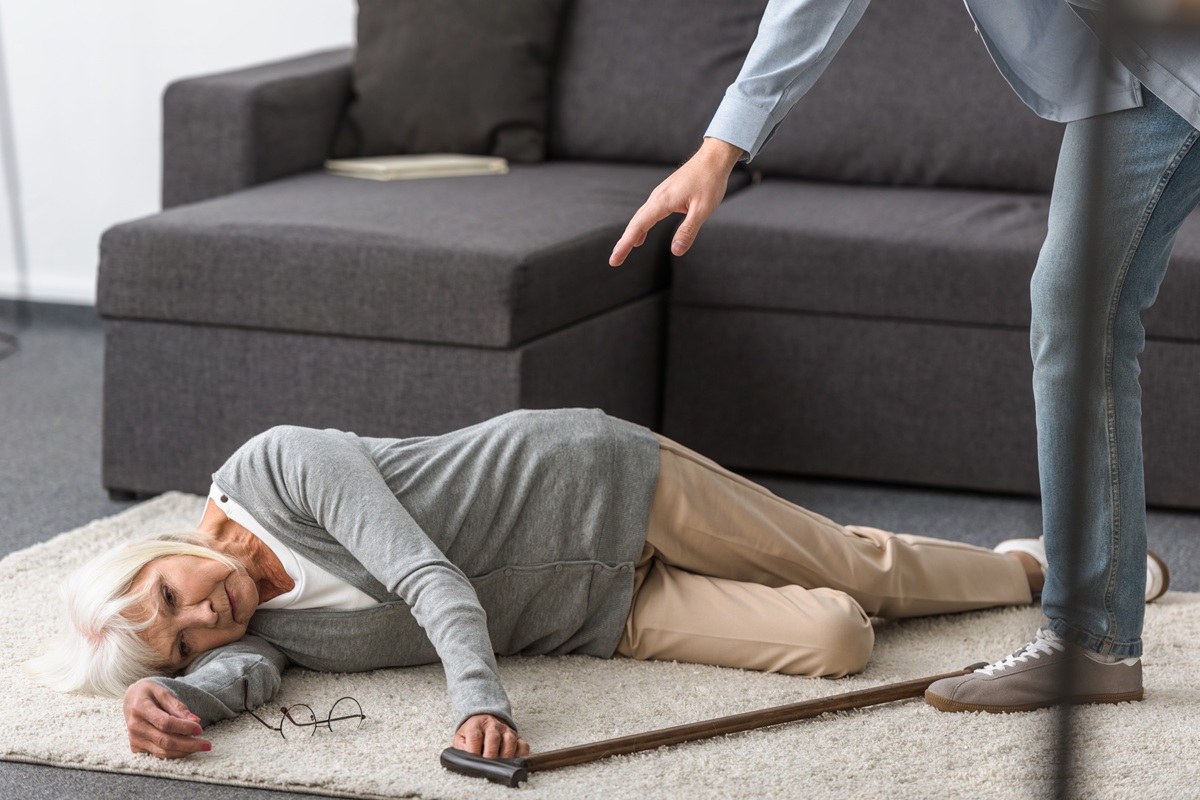
For older adults, staying healthy and steady is vital at every stage of aging. But one culprit sneaks in and causes more than 4 million emergency department visits among older adults. It’s falls. Falls are one of the leading causes of injury-related death among older adults 65 and older.
A fall isn’t just an event that a senior experiences. It’s a complete tragedy that affects their independence in many ways. A single fall can break the confidence of an aging adult who was confident in his mobility. Suddenly, the fear of falling becomes real. But how does one fall change everything? And what are the possible causes of falls? And what practical strategies can help you cope with mishaps like these? You might be wondering about all of this right now!
Today’s blog covers everything a family needs to know about measures for fall prevention for elderly. We will briefly discuss the main senior fall risk factors, balance exercises for the elderly, and how a family can work toward home safety for seniors, then show how senior living helps reduce fall risk and promote a safe, engaging daily living experience for older adults. Use this fall prevention checklist to support your aging parents’ safety.
Why Seniors Fall: The 5 Risk Domains
Falls should never be considered a normal part of aging. If it happens, it can directly endanger their life. Falls among the aging population aren’t random accidents but rather the predictable outcome of overlapping vulnerabilities. While there could be numerous underlying causes, reasons why seniors fall are broadly divided into 5 main categories as follows:
Home Environment
Home environmental hazards account for roughly 30% to 50% of falls among older adults and interact directly with physical and cognitive changes. Here’s what accounts for common home environmental hazards:
- Flooring and Walkways: Loose throw rugs, unmanaged electrical cords, and cluttered hallways.
- Bathrooms: Slippery tub surfaces, wet floors, and missing grab bars.
- Lighting: Poor illumination that obscures physical obstacles.
- Stairways: Worn steps, broken or missing handrails, and busy stairs.
Strength/Balance
Declining muscle strength and poor balance are the primary intrinsic risk factors that most affect fall risk in older adults. Aging causes natural muscle weakness, including reduced muscle mass and power, which can make walking or standing difficult. Aging also reduces balance and coordination, making it harder to recover after a misstep or stumble.
Medications
Certain medications increase fall risk in older adults through physiological changes, side effects, and polypharmacy. Common high-risk drug classes that increase the risk of falls are known as Fall-Risk Increasing Drugs (FRIDs) and include psychotropics and sedatives, cardiovascular drugs, pain relievers, blood sugar-lowering drugs, and anticholinergics.
Vision
Having impaired vision more than doubles an older adult’s risk of falling. Those with loss of depth perception have a harder time judging steps, curbs, and uneven ground. Reduced contrast sensitivity also makes it harder to see changes in floor surfaces, steps, or low-contrast objects. Those with conditions like glaucoma or cataracts often experience visual field loss due to missing obstacles or hazards in peripheral vision. Moreover, poor vision when combined with home hazards makes seniors 3 to 4 times more likely to fall.
Footwear
Improper footwear and walking barefoot or in stocking feet significantly increase fall risk in older adults. This reduces stability, traction, and sensory feedback.
15 Evidence-Based Fall Prevention Strategies
No single remedy is the best fall-prevention strategy. The most effective way to prevent falls in seniors is a multi-factorial approach that combines regular balance and strength exercises, home hazard modifications, medication reviews, and clinical reviews.
1. Remove Home Tripping Hazards
The home environment poses the greatest fall risk for seniors. Families can significantly reduce fall risk for their aging loved ones by removing tripping hazards and making room-by-room modifications. In walkways and on floors, they can clear clutter, manage cords, remove rugs, and repair uneven surfaces. Installing handrails on the staircase would further boost safety and reduce the risk of falls. Likewise, motion-sensor lights near stairs and commonly used hallways can improve visibility. Adding non-slip surfaces in the bathroom and mounting grab bars are other feasible ways to enhance safety for an older adult.
2. Progressive Resistance Training
Progressive resistance training (PRT) involves systematically increasing muscle strength, power, and functional stability in the lower limbs and core. Lifting weights and using resistance training 2 to 3 times a week can drive meaningful muscle and strength adaptations. Seniors can focus on major lower-body and trunk muscle groups such as quadriceps, glutes, and calves, which support postural control and help catch a stumble.
3. Complete Balance And Gait Training
Structured balance and gait training programs combine lower-extremity resistance exercises and multi-component movements to reduce fall risk and improve mobility in older adults significantly. Three evidence-based programs deliver meaningful results for seniors looking to reduce their fall risk. These include the Otago Exercise Program (OEP), Tai Ji Quan, and perturbation-based training.
4. Regular Medication Review
Seniors often have evolving health conditions that can affect multiple areas of life. For these conditions, they may be prescribed new medications, some of which may increase their risk of falling. Therefore, a key way to prevent falls is to have a regular medication review with a doctor or pharmacist to identify and reduce the use of fall risk-increasing drugs (FRIDs).
5. Get Annual Vision Exams
An annual dilated eye exam is another evidence-based recommendation from the Centers for Disease Control and Prevention (CDC) and the National Council on Aging (NCOA) to reduce fall risk in adults aged 65 and older.
6. Screen Hearing Health
Screening for hearing health and treating hearing loss can lower fall risk in older adults by up to 50% to 65%. Address hearing loss promptly, as spatial awareness and balance are closely tied to inner-ear function.
7. Tai Chi
Regular practice of this gentle martial art can improve lower-body strength, coordination, and dynamic balance, all of which help reduce fall risk. Tai Chi significantly reduces fall risks in older adults by enhancing balance, lower-body strength, and neuromuscular control.
8. Install Bathroom Grab Bars
Bathroom grab bars provide reliable anchor points during high-risk transitions like sitting, standing, and stepping onto wet surfaces. Sturdy metal bars can be placed in showers and beside toilets to support safe transfers.
9. Improve Indoor Lighting
Improving indoor lighting can reduce fall risk in older adults by up to 43% by enhancing depth perception, reducing dark shadows, and supporting postural balance. Install bright LED bulbs and motion-activated nightlights in hallways, staircases, and bathrooms.
10. Wear Supportive Footwear
Supportive, well-fitting footwear with low heels, non-slip soles, and firm rubber soles significantly reduces fall risk in older adults by providing a stable base and improving balance.
11. Participate In Multifactorial Screening
Using validated clinical tools like the CDC STEADI Algorithm is another effective way to systematically identify and address individual physical, environmental, and medical hazards. Multifactorial screening and targeted interventions reduce fall risk in older adults by systematically identifying and addressing individual physical, environmental, and medical hazards.
12. Incorporate Dual-Task Exercises
Dual-task exercises train the brain to manage physical movement and cognitive distractions at the same time. Seniors can practice walking while performing cognitive tasks, such as counting backward, to prepare for real-world distractions.
13. Evaluate Bone Mineral Density
Bone mineral density (BMD) measurement is an essential, evidence-based tool for assessing and reducing the risk of fall-related fractures. Seniors over 65 should be tested for osteoporosis to manage fracture risk if they fall.
14. Utilize Assistive Devices
Seniors must use properly fitted assistive devices like walkers, canes, and bathroom grab bars when recommended by a physical therapist or doctor.
15. Join Community Fall Programs
Joining a community fall program can help a senior improve balance and strength, reduce fear, and learn practical ways to identify environmental hazards and manage risk factors.
After A Fall: The Response Plan Every Family Needs
Here’s a post-fall response plan to help families handle injuries safely, assess risks, and prevent future incidents.
Immediate Response Steps
- Stay calm and check the senior from head to toe for bleeding, swelling, or pain before moving them.
- Call 911 immediately if the person is unconscious, confused, bleeding heavily, dizzy, or complaining of severe head, neck, or back pain.
- Do not rush to lift them, as forcing an injured person up can worsen hidden fractures or spinal trauma.
Medical Evaluation And Review
- Schedule a doctor visit and request a full medical checkup even after minor slips to screen for concussions, hairline fractures, or internal injuries.
- Review medication and ask a pharmacist or doctor to check if current prescriptions cause dizziness, fatigue, or balance issues.
- Document the event by writing down the time, location, activity, and environmental factors surrounding the fall to spot patterns.
Home Preparation And Reachability
- Sit in high-risk areas like bedsides or bathroom doorways to see what emergency tools or phones are within arm’s reach, and take steps to improve accessibility.
- Keep a visible sheet near the front door or refrigerator listing the senior’s medications, allergies, emergency contacts, and medical conditions.
How Senior Living Community Engineers Reduce Fall Risk
A senior living community does what’s necessary to promote a safe, liveable environment for the senior. These communities reduce fall risk through thoughtful architectural design, regular health assessments, and proactive wellness programs.
Their community features specialized environments and design, and staff conduct tailored risk assessments and regular medication reviews. They offer health- and fitness-oriented programs, including Tai Chi, chair yoga, and balance training that help seniors build strength, balance, and coordination and reduce their risk of falling.
A Printable Fall-Risk Checklist
Here’s a printable fall-prevention guide families can use to create a safe, secure home environment for an aging loved one.
Floors And Walkways
- Clear clutter: Pick up books, shoes, and papers from the floor.
- Secure rugs: Remove loose throw rugs or use double-sided tape and non-slip backings.
- Tame cords: Move lamp and phone wires away from walking paths and next to the wall.
- Clear paths: Arrange your furniture so you have a wide, open line when walking through rooms.
Stairs And Hallways
- Fix handrails: Make sure handrails are installed on both sides of the stairs and are sturdy.
- Brighten steps: Put non-slip treads on bare wooden stairs or secure loose carpet.
Bathrooms And Bedrooms
- Add grab bars: Install grab bars next to the toilet and inside the shower or tub.
- Prevent slips: Put non-slip rubber mats on slippery tub and shower floors.
- Light the night: Place a nightlight along the path from your bed to the bathroom.
- Reach the lamp: Keep a lamp close and easy to reach right next to your bed.
Personal Habits And Health
- Wear shoes: Wear supportive shoes inside and outside the house; avoid walking in just socks or loose slippers.
- Get up slowly: Wait a moment after sitting or lying down before standing up.
- Check vision: See an eye doctor once a year to keep your glasses up to date.
- Review medicines: Ask your doctor or pharmacist to check your prescriptions and over-the-counter drugs for side effects like dizziness.
FAQ
- What are the main causes of falls in the elderly?
The leading causes of falls in older adults are gait instability, lower body muscle weakness, and balance impairments.
- Which medications raise fall risk?
Common high-risk medication classes include psychotropic and CNS-active drugs, sedatives and hypnotics, blood pressure and heart medications, opioid pain medications, muscle relaxants, anticholinergics, antihistamines, and antiepileptics. These medications may cause side effects such as dizziness, sedation, confusion, blurred vision, or sudden drops in blood pressure.
- How do vision and footwear contribute?
Declining vision affects depth perception and contrast, making it harder to judge distances and changes in floor surfaces, while an improper fit and poor sole grip reduce traction and increase slip risk. Together, these issues increase fall risk in older adults by disrupting balance, depth perception, and stability.
- When do repeated falls signal a bigger problem?
While experiencing a single fall doubles the chances of falling again, two or more falls within 12 months indicate a compounding breakdown in balance, strength, or cognition. Falls that happen without an obvious environmental hazard especially point to acute medical issues.
- How do assisted living communities prevent falls?
Assisted living communities prevent falls by combining personalized risk assessments, environmental safety modifications, and trained staff supervision. Professional staff conduct an initial evaluation of residents’ physical health, balance, and fall history to assign a care plan. The community has environmental safety features that help keep residents safe and secure.
Park Place Camarillo—A Compassionate Care Partner You Can Look Up To
At Park Place Camarillo, we recognize falls as one of the most serious threats to a senior’s safety. It can incapacitate an older adult to the point where they can no longer live independently. The fall prevention strategies above explain how to prevent falls in older adults and why a senior living community is a good fit. Families must understand that these are strategic investments in their loved one’s well-being and longevity.
Given the serious risk that falls pose to a senior’s safety, it’s best for families to choose senior living support for their aging loved one. To do so, they can contact us at Park Place Camarillo. We understand that every senior’s lifestyle and healthcare needs are different. They need tailored care that addresses their concerns without overwhelming them. We provide this through personalized care plans tailored to each individual’s needs and preferences.
Alongside tailored care programs, we offer wellness programs, social events, and a curated selection of activities and programs that make residents’ lives more vibrant and fulfilling. Schedule a tour and visit our community to see firsthand the safety measures we’ve put in place to support your loved one as they age.

